Thursday, 12 September 2013

A living treasure

We took some time out from what seems to have been the busiest school term ever to wander with some lovely friends in their garden on Sunday.


Sometimes it seems God smiles upon me and gifts me with a moment of perfect light for taking photographs.


Late Sunday afternoon was such a time,
our friends' garden basked in a warm glow.


Our friends bought their property about five years ago from an elderly couple who were obviously avid gardeners and serious plant collectors.


Their garden is a real treasure! With each season, new delights emerge in wondrous succession.


 There are so many plants in this garden that are unfamiliar to me. I love the challenge of working out what they are, seeking clues from unfurling buds, or new leaves. 


As Australian gardens burst into springtime bloom, our friends' garden is spectacular.


There are sweet surprises waiting at every turn!


The daffodils form a veritable sea in every shade of gold.


There are countless different varieties, 


some with peachy pink, frilly trumpets ...


... others with simple, electric orange centres ...


... and around another corner, these sparky Pheasant Eye beauties!


The resident Crimson Rosellas kept a cheeky eye on us as we wandered the garden. 


 No doubt they will have their way with the fruit trees at a later date. For now, the orchard is in glorious bloom.


The magnolias were magnificent,


especially bathed in the warm, afternoon sun.


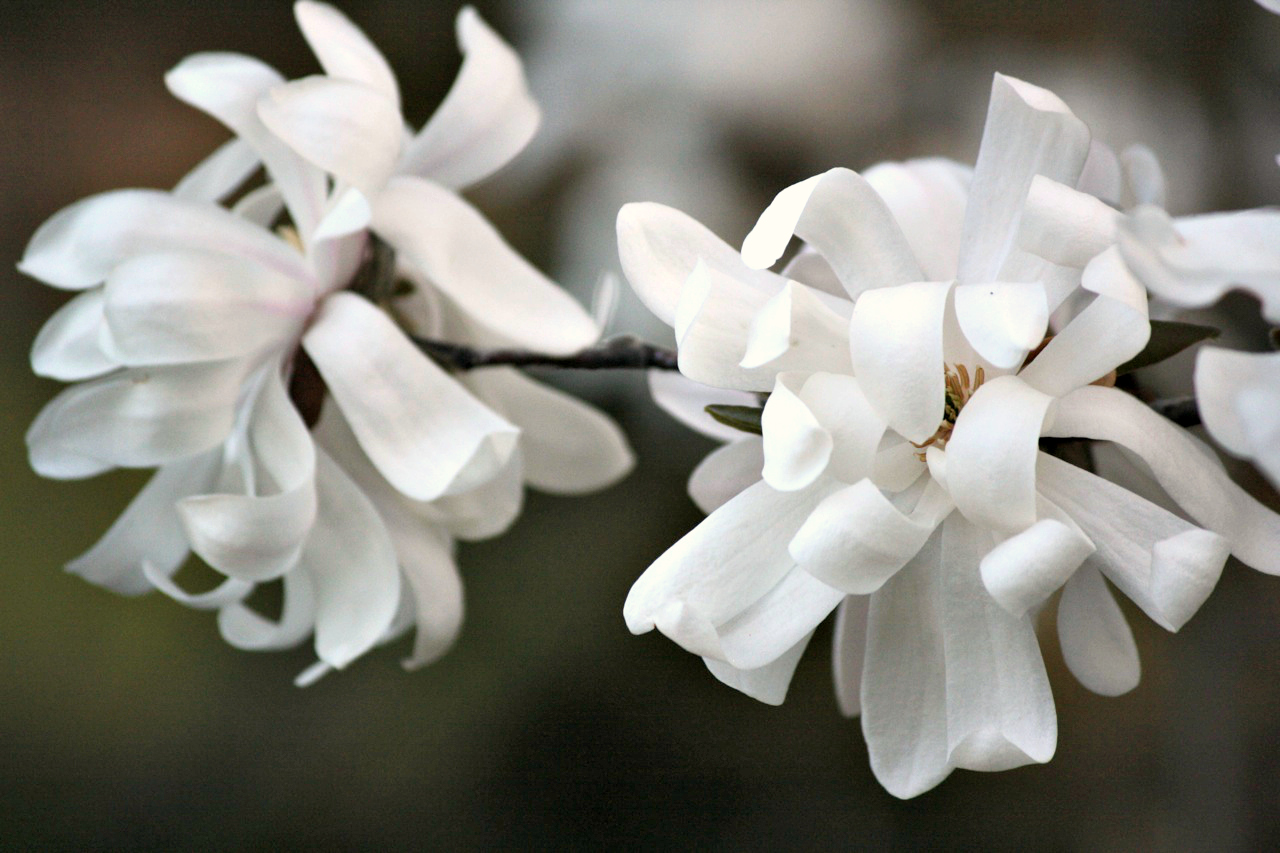
Both the pink and white varieties of Magnolia stellata were true to form,


shooting starbursts from bare branches.

 Now if you happen to have made it to the end of this rather epic post and like a horticultural mystery, try this one on:


This unusual specimen sits quietly in one corner of the garden. It has the  most wonderful cream and green mottled stem.


And the leaves have really interesting white markings. Hmmm, intriguing! Clues anyone?

I will no doubt coerce my friends into sharing this special garden with me again soon! A very lovely way to spend a Sunday afternoon :) 

Tuesday, 27 August 2013

A flannel quilt for me

I took my newest quilt and my two youngest offspring to the Botanic Gardens on the weekend. I required said children for this shot:


Children are crouched behind the quilt, one grasping each corner, giggling maniacally about what I'd do if they were to let go. Hmmm ...


The quilt is made predominantly from cuddly Anna Maria Horner flannels and I've made it up in a similar way to my raw-edge layer cake quilt.


The task of clipping all those raw edges was made ever so much easier with the purchase of some Fiskars Easy Action Micro-Tip scissors.  According to my Sweetness, they are also very good for clipping fingernails. Hmmm ...


I didn't have quite enough fabric, so I've thrown in an occasional nine-patch to use up the smaller pieces.


The Baby Girl was quite happy to swan about the gardens, quilt draped about her shoulders for the sake of an artistic shot.


The Boy's preferred pose was this: 
"How's this Mum? Is this helpful?" Hmmm ...


An unkind mother might say I've captured him at his best!

Monday, 5 August 2013

Snowdrops and (winter) roses

Some cheerfulness from my winter garden on what is otherwise a very dull sort of day.


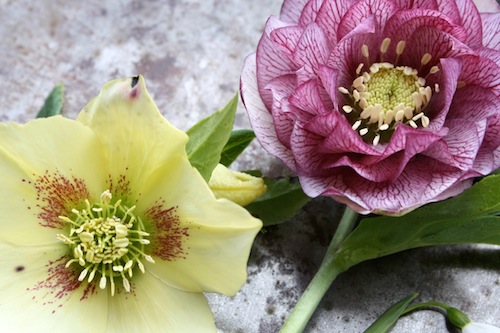
Hellebores, or winter roses, can always be depended upon to pop up their heads when nothing else is willing. 


This is the third winter for these blooms, and each year they are stronger and more abundant. They were purchased from Post Office Farm Nursery. 


H. x hybridus 'Double Picotee'


H. x hybridus 'White spotted'


H. x hybridus 'Primrose yellow spotted'

If I've whetted your appetite for these winter beauties, you can learn a lot more about them in this Gardening Australia interview with Peter Leigh from Post Office Farm.


Or for those not blessed with a green thumb, perhaps this archival botanical print from Australian botanical artist, David Mackay is a more satisfying option!

Tuesday, 23 July 2013

A mother's wisdom

And so Bloom skulks sheepishly back to her blog, with the meagre excuse that 'life got a bit busy'; hoping that her friendships will withstand such neglect, and that they may be resumed forthwith and with forgiveness!

Heading off to the coast for a few days with the family, I couldn't pass up the chance to visit the Mount Tomah Botanic Garden. This prospect was greeted with howls of protest from the back seat. "No Mum, no! Not another Botanic Garden. Don't do it"!


Oh yes indeedy! This is always how it goes. Children emerge begrudgingly from the car and trudge, slump-shouldered and moaning 
... for the first few steps.


And then there is a glimpse of a view, a promise of things to be explored.


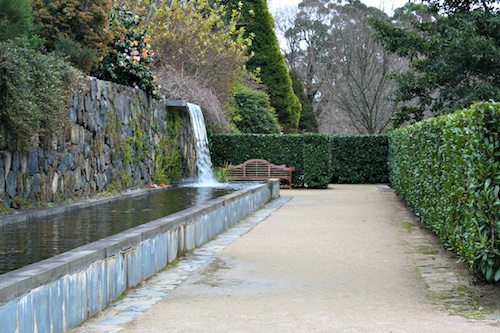
They turn a corner, and the sight of a water feature begins to soften their resolve to be miserable.


With each step, there are new pleasures to take in, and slowly they are brought around. "Mum, this is quite impressive". Ummm, yes ...


Before long, they are running ahead of me, eager to see what awaits at their next turn, leaving me way behind as I meander peacefully with my camera.


The gardens were stunning, even in mid-winter, largely due to the well-planned contrast in form and colour of the plantings. I had not visited Mount Tomah since a friend's wedding 20 years ago, so it was wonderful to see how it had changed.


The proteas were in spectacular bloom.


How I would love to have gathered up an enormous bunch of them!


And the leucodendrons provided cheery bursts of colour, often set against the rugged local basalt, or contrasting grey-foliaged plants.


With over 6000 species planted in the Garden, I haven't a chance of giving you botanic names.


Occasionally, aforementioned children drop back to meet me with excited tales of where they have been and what they have found ahead. 


There are photos with and without newly enthusiastic 14-year-old.


"Hey Mum, this would be an awesome place for freerunning", he shouts as he disappears from view again.


After a half-hour exploration for them, and a meander for me, I am greeted with: "That wasn't so bad, Mum". Or even, "Mum, that was actually quite fun"! And so I remind them of the favour I do them every time I make them suffer a garden, and we all traipse back to the car, happy for the experience.

Friday, 7 June 2013

What is your work anyway Bloom?

My 'real' job has taken me away from blogging lately. I thought I'd tell you about it as I've precious little else to show you! Prepare yourself - it is a little weird. My youngest daughter said to me the other day, "Mum, why can't you get a normal job? My friends ask me what you do and I don't know what to say!" 

My University training, many moons ago, was in Plant Biochemistry. I completed a PhD in Agricultural Chemistry at the University of Sydney. The next choice for me professionally was to travel overseas to pursue post doctoral studies. However, being in my late twenties at the time, I forewent this opportunity and chose to stay in Australia, move to the country and start a family. Bang went the career! But I would make the same decision again for my precious kids.

These days, I do some casual laboratory work with the Department of Primary Industries, a State Government department. There have been significant job cuts in the Department this year, so I am lucky to have any work at all.


A thousand points to anyone who knows what these are! I am working in Entomology at the moment. Our section monitors populations of fruit fly in New South Wales. And these are fruit fly pupae (not poopies as my daughter would have you think)!


For the last few weeks, we have been busy running a small research project. This is an unusual opportunity for us, and my inner science geek has come to the fore again, getting excited about setting up trials and measuring stuff! Love it!


Fruit fly is a major pest to fruit and vegetable production worldwide. There are many different varieties and it is important from a quarantine perspective, and for export markets, to monitor distributions, and control numbers where possible. 

One of the ways fruit flies are controlled on a large scale is by sterile fly release. This is a biological control where sterile flies are released into the wild population. The sterile flies mate with wild flies, and the eggs produced are infertile.

OK Bloom, that's all very well, but how on earth do you sterilise a fruit fly? With a very small scalpel?! Ah no. Unleash your inner geek for this bit.


Source

Fruit flies are bred in enormous numbers in a dedicated fruit fly factory (I kid you not)! The factory supplies up to 20 million sterile Queensland fruit flies per week for release. When the flies are at pupal stage in their life cycle, just before emergence as adult flies, they are sent to ANSTO (Australian Nuclear Science and Technology Organisation) at Lucas Heights where they are exposed to a cobalt-60 gamma radiation source. It's true! The level of radiation is sufficient to sterilise the flies. The irradiated flies are not radioactive, and pose no threat to humans.


Our research project has been investigating the level of radiation required to sufficiently sterilise Queensland fruit flies, while ensuring they can still fly and mate.


Most of the action happens in this room, which is kept at constant temperature (25 degrees Celsius) and humidity. Fruit fly pupae that have been irradiated at different levels are reared to adults in here.


We have been measuring emergence (how many reach adulthood), longevity (how long they live for), and flightability (how well they fly). 


Much of this work is done under a microscope. Yep, that's me in all my geekiness :)


We are also breeding successive generations of flies in these tubs. We sort flies by sex, rear them to maturity and then mix the guys and gals back together to breed. It's just one big party in there!

Hang on a minute there Bloom? You sex fruit flies?! A little tricky perhaps keeping them still while you scrutinise their privates? Awkward!

So glad you asked! The first step is to slow the little creatures down. This is done by putting them in a refrigerated cold room for 15 minutes. Closely followed by putting us in the cold room, clad in snow gear if possible. The flies are immobilised by the cold, just slightly more that we are. Using featherlight tweezers, we gently pick them up and scrutinise. 
Source

For the females, we are looking for an ovipositor, which is a pointy egg laying structure, at the end of the abdomen. It is usually quite obvious.


The men are a little more coy. They are distinguished by sets of cute little 'eyelash-like' hairs on their abdomen.

So that is a little glimpse of how I've been spending my days. You can see why my daughter might have trouble telling her friends! 

This is just one of my paid jobs, the one closest to my original training, although still far removed. I moonlight as a designer (my favourite job!) and manage our small farm too. But of course, all of these things come second to the most important job, the one I'm least qualified for, pays the least and I worry about the most - I am mother to my three children!

Have a great weekend everyone, a nice long one for the Australians! 
Related Posts Plugin for WordPress, Blogger...
Blogging tips